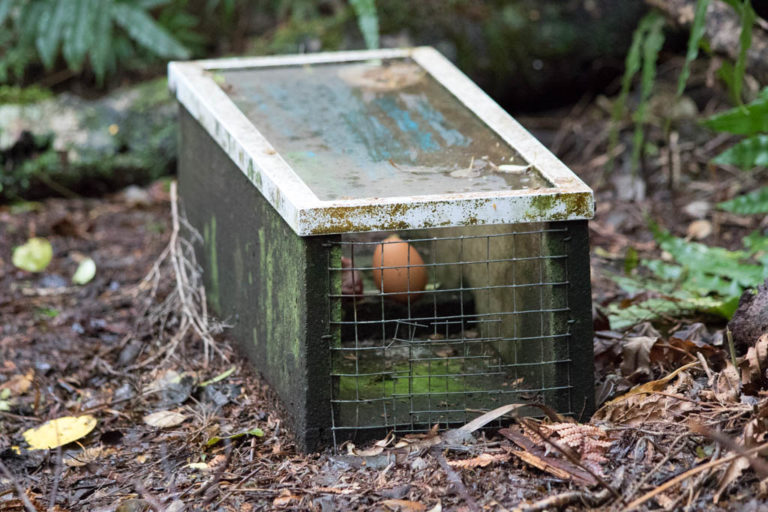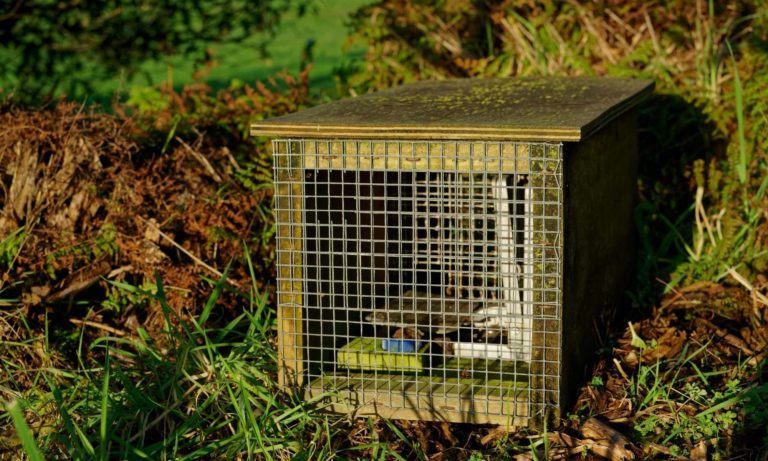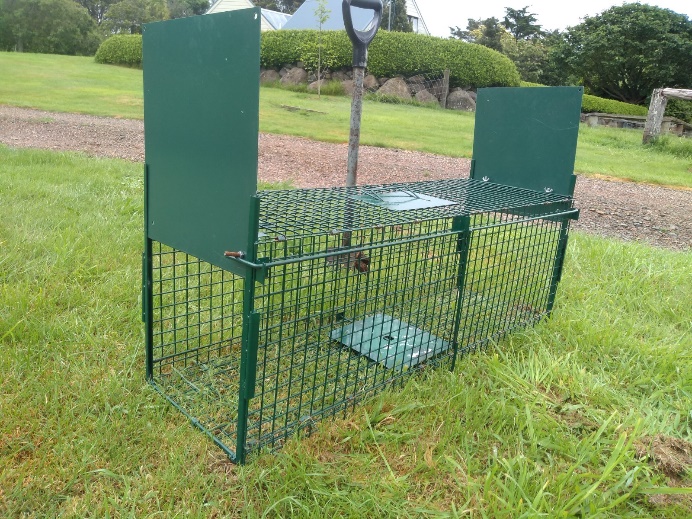
While tempting the answer is no! The target species are all very proficient scent hunter/scavengers, they will sniff out the lure. They follow scents to the source, meaning they walk over the treadle while searching for it. Putting other lures in and around the cage means they can reach the source before standing on the treadle. If they don’t like the food source they will leave without fully entering. In human terms, if a bakery made its money from people coming to look at the food, they would do a lot better. Smart cages do a lot better because they can take advantage of the fact most animals will inspect a scent source.
How do I refill the lure?
If your smart cage has a ZIP Motolure it will need filling every 9 months. You will need a 60ml catheter tip syringe, a chopstick, and 2 minutes to watch this video:
Most of the year night shooting for possums doesn’t achieve good results. You may bag a few, but not in the numbers that are needed to achieve good conservation impact, so it’s hard to justify the time and effort. This is because for three seasons of the year possums are up in trees that are in full leaf, so they are obscured by foliage and hard to target. But spring is a different matter.
.
At the end of August and the beginning of September, the buds of deciduous trees all across Franklin start to pop open in a sudden eruption of green. Tasty, tasty green, because to possums, those new tender buds are just like lollies, and their favourite lolly is willow. Every spring possums move out of their regular haunts to feast together on fresh buds – nicely exposing themselves to anyone walking below with a spotlight. After the first flush of willow is over, the possums transfer their attention to poplars, which come into leaf a little later. On these sparsely-foliaged branches they have nowhere to hide.
.
Shooting is an allowed activity under level 3 lockdown, so if you’re feeling like blowing the cobwebs away, take up your gun and spotlight and go for a walk amongst the willows or the poplars, and you’ll find yourself in a target-rich environment. If you’re not sure if there’s possum activity in a particular area, walk under the trees in the daytime – broken twigs, small branches on the ground and missing buds are sure signs that you’ll have a good night’s shoot there.
.
Possum numbers can increase by up to 30% a year, so if you kill 80% of a population by targeted shooting in spring on willow and poplar it will take six years for that population to recover – well worth it!
.
Spring shooting lets you hit rats harder too.
Used consistently, spring shooting can get possum numbers so low across an area that they hardly hit bait stations at all. This means most of the bait in the stations will be available for rats – dropping these pests really low as well. In an area with low possum numbers you only need to use 1kg per bait station per year, even when pulsing that bait station 5 times a year. We’re seeing bait usage this low in many areas that have been under possum control for a few years.
.
As with all shooting activities, follow the seven golden rules of firearms to have a safe and satisfying time when out bagging possums.
Treat every firearm as loaded.
Always point firearms in a safe direction.
Load a firearm only when ready to fire.
Identify your target beyond all doubt.
Check your firing zone – think where the bullet will go if you miss your target.
We are in the midst of bird breeding season, and stoat young are starting to leave the nest and explore the outside world. From local feedback, it would seem the possum population numbers are well down compared to what they have been, and rats seem to be under a strict thumb too. This is great news for our birds but we can’t become complacent.
If you have any updated catch numbers, now is a great time to send them through to pestcontrol@tewairoa.org.nz.
During our first ever lockdown, local trapper (now committee member) Julia sent me an email saying she was on a mission to catch one pest for each day in lockdown. I checked in on how she was doing this time around, only to find she has been hitting pests so hard in the past year and a half that she had very little to report! We are really happy with these results, but encourage property owners to remain vigilant as there is constant reinvasion pressure from property boundaries, and likely a small remnant population of trap and bait-shy animals.
Below is a mixture of tips and tricks both from Auckland Council recommendations and suggestions from members of the Friends of Te Wairoa pest control project. There is no one correct way to control pests. They are intelligent and learn to be wary, passing these behaviours to others. This means it is important that we constantly change our mode of attack, so that they are caught unawares, literally!
Always wear gloves when handling dead animals – many animals can carry leptospirosis.
Rats & Mice:
Placement:
Set up bait lines 100m apart, with stations or traps every 50m along the line. Use 25m spacings on boundaries (except where neighbours are also trapping). Alternatively, set 2 bait stations per hectare
Place traps near a waterway or along a fence line/retaining wall. Rodents like to be able to run between areas using ‘shelter’ rather than being in the open.
Consider the convenience of checking and maintaining gear when placing it, e.g. along existing paths and tracks
Place traps considering exclusion from children, stock and flood levels
Number traps to avoid missing one when checking. This also helps to collate data relevant to each site over time.
Lure:
Peanut butter or Nutella. Can be mixed with kibbled wheat or oats.
Using a lighter, melt a small piece of cheese to the trigger mechanism (except if plastic)
Small piece of dog treat jerky, or white chocolate
Tips:
Ensure traps are stable so they don’t scare off an investigating animal
Attach traps to a board for areas difficult to access e.g. under a house or in a ceiling. This also prevents an animal running away with the trap
Build a tunnel around rat traps to make them more attractive e.g. board base with rigid plastic stapled tunnel-fashion on top, or cut old nail containers into a tunnel shape.
Attach wax bait blocks with a nail to fenceposts, with a half milk bottle on top to protect it from the weather. Alternatively place a length of wood with a nail inside a juice bottle with the ends cut off.
If you don’t have enough bait stations, use an ice-cream container. Cut a C-shaped hole in the edge of the tub for an entry hole. You may need to fashion an awning to prevent rain getting in as the bait will spoil.
If snails and slugs are getting to the bait, sprinkle some slug bait in the bait station.
Place bait inside a bread bag and secure with a knot. Jam the knot between the floor of the bait station and the housing. This will keep the bait active longer and force the animal to ingest some bait as it breaks into the bag. Smear some lure on the bag to increase attraction.
Legally, bait must be placed in bait stations and not on the ground (requires a Controlled Substances License and approval from a local Medical Officer of Health).
Possums:
Placement:
One trap per hectare. Bait line setup similar to rodents.
Place traps and bait stations at the base of an attractive tree or in a grove of trees e.g. an orchard, a large palm or large natives
Near waterways that possums may drink from, or a path that they might use e.g. fence line, farm track
Lure:
A cut apple or carrot with cinnamon rubbed on the cut side
Feijoas, citrus peel or other fruit they are enjoying
Cut a cube of polystyrene and spread it with vegemite, peanut butter or jam. This will last longer than an apple.
Mix icing sugar and white flour, 1:4, with a cinnamon, curry powder or aniseed. To lure possums to the trap sprinkle a handful outside the trap, or add water to create a paste to smear up a tree to the entrance of the trap.
Tips:
Attach traps to a board for elevation from pets and ease of relocation rather than attaching directly to a tree.
Buy cinnamon in bulk e.g. Bin Inn
Possums are curious, so if you haven’t caught anything in a while move traps a few meters away or change the shape of the trap by putting a branch or rock on top. Bright ribbon will also entice their curiosity.
Leave recently caught possums near the trap to attract others.
Possums prefer travel over logs rather than on the ground – use this to your advantage when placing traps.
Mustelids:
Placement:
Approximately one trap per 15ha
On flat ground so the trap is stable and doesn’t rock
Near a waterway, or along a fence line/retaining wall. They like to run between areas using ‘shelter’ rather than being in the open.
Angle the trap so liquid from the lure exits the trap rather than pooling around and corroding the trap mechanism.
Lure:
A whole, raw egg (also functions as a visual lure). When refreshing, throw it into the bushes nearby to attract mustelids to the area.
Fish/salmon, meat scraps from dinner (raw or cooked)
Possum or rabbit meat from recent catch
Mayonnaise mixed with salmon oil (longer lasting lure)
Rub a freshly caught possum or mustelid on the trap. The scent will attract mustelids.
Tips:
Disturb the ground near the trap entrance by pulling out grass or roughing up leaves. Clear a 50cm path to the entrance with the heel of a boot to look like an animal’s path.
Traps need to be serviced and tested often to ensure they will be activated by the weight of a mustelid. Check traps by using 80g of weighted rags. This will increase the life of a trap as opposed to dry firing. Oil the treadle occasionally.
Keep traps clean of spider webs and other obstructions to create the illusion that the tunnel is frequented by other animals.
Spray the trap with salmon spray to mask the human smell (also functions as a lure).
Mustelids will be attracted to dead animals in a possum trap, so it can be worth setting a mustelid trap near a possum trap.
Rabbits:
It is best to shoot these pests. Alternatively, use a live trap with a trigger plate and vegetables as the lure with a trail leading into the trap. The smell of a rabbit who has urinated or left droppings can be enough to entice another into the trap.
As always, get in touch with me if you need specific advice, a visit, or more hardware. I enjoy hearing about what’s happening out there so good news stories are great too.
Happy trapping,
Lenny van Heugten
Pest Control Co-ordinator
Friends of Te Wairoa
Nine months ago, a man called Paul was on a golf course. “Hmm”, he thought, as he picked out a new club to replace the one he’d somehow bent on a particularly hard piece of air. “Looks like there are a fair number of trees around here. That probably means possums”.
Most people would have shrugged the thought off, but Paul had a secret identity – he ran the CREST conservation group that covers the length of the Manukau Harbour from Karaka to Clarks Beach. And this was the Clarks Beach Golf Course.
“Wouldn’t it be nice”, mused Paul as he sliced another divot off the green, sending it spinning miles out into the open sea, “If we could get some good predator control going here. I mean, it’s really close to the beach, which would be good for the dotterels, and tūis would probably like these trees, and – “
At this point he rocketed his last ball past a somewhat confused magpie into the middle distance, and was forced to retreat to the clubhouse.
But the idea of a pest-free golf course stayed with him on the walk, and whilst drowning his sorrows in a cool beer, he ended up chatting about it to a lifetime member of the golf club called Lew White. “Sure”, said Lew. “We lease the golf course land from Auckland Council, and they’re pretty keen on this pest control stuff too. I reckon they wouldn’t mind if we set something up between us. Let’s try a few traps”.
So in April, the CREST provided Lew with 15 “Flipping Timmy” possum traps, which went up on trees all over the golf course. Lew and a keen young man called Reon checked them every morning and evening, and the results were incredible – between eight and twelve possums every night. Over the first ten days they got 82 possums! None of the golfers seemed to mind the trapping, nor did the dog-walkers who used the course. One lady did say she’d seen a dead possum hanging out of a trap, but she wasn’t upset by it. Her dog’s opinion about the dead possum remains unknown, but is presumed to be favourable.
“It’s going really well”, said Paul to Lew, “but Reon’s noticing a lot of rat poo around when he’s clearing the possum traps. Could we do something about them as well?” “Can’t put rat traps down”, said Lew. “All the golfers’d be catching their fingers in them trying to get the golf balls out”. “Oh no,” said Paul. “We could use bait stations. Much safer”. Lew regarded him suspiciously, but then the light of inspiration flickered in his eyes. “We’ll give it a go”, he said. “But only if you promise to use foot-long tees on every round you play here from now on. Deal?” “Deal”, said Paul solemnly, and they shook on it.
So twenty brand new Pied Piper rat bait stations went out, and signs went up, and Reon checked and filled the bait stations. The initial bait take-up was huge but after a while it settled down so Reon only needed to fill them each school holiday. A sign that the rat population was thoroughly supressed. Meanwhile the possum catch in the traps had dropped to only about six per week, so Paul organised a few Philproof bait stations to mop up any stray possums and keep the population down. A few Doc200 traps in boxes went in to cover other pests like stoats (and they also caught a few rats).
Every pest control device was logged on TrapNZ, so progress could be tracked. After a month of baiting, Reon put out some wax tags to see how many pests were left. He found a few chew marks in places well away from where the traps and bait were. Places that would soon be covered! Reon set off at speed, with a gleam in his eye.
And that is the story of how Clarks Beach Golf Course is not only the top-voted golf course in New Zealand, but may also now be the most pest-free golf course in New Zealand.
And the best thing about this? The recovery of the birds.
Before Lew and Reon started their work there were no tūi or kingfishers on the course, or indeed any birds except magpies and sparrows. Now, wherever you are on the course you can see or hear a tūi or a kingfisher. In some places you can spot ten or more tūi at once. There are berries hanging on trees which would once have been stripped bare by the pests.
In short, it’s full of birdies.
So if you think your local golf course needs more birdies, then have a chat with them about following the example of Clarks Beach. If they say it’s too hard, get them to call Lew to get the lowdown on the benefits. He’s gotten pretty keen about pest control now he’s seeing the results. Meanwhile, Reon has learned heaps about trapping and baiting, and he’s also become a pretty good photographer. In fact, all of the photos in this article were taken by him out on the golf course.
And Paul? They say that sometimes, on a cool and misty morning, if you listen very hard, far away you can hear the cry of a man shouting: “Bugger! I’ve lost another ball”.
People are starting to use the Smart Cages across Franklin, but by far the biggest buy-in has been in Whiriwhiri. The concept was to flip the trapping game on its head, do away with walking lines, rotten animals, re-baiting, and ineffective traps. Replace all of that with high interaction multi-species traps, the type that need no expertise, that lure themselves, and only require visits when they’ve done their job.
It’s early days but the radical change in the results really does seem to prove the theory. For far less effort than was required to catch only possums, landowners are now catching all the target species, while keeping domestic cats, and birds safe.
Note this isn’t a regimented trapping group – this is farmers, life-stylers, hunters, etc, working independently with potentially different motives, on a collaborative project across a few thousands hectares.
Any other wins? Yes!
Landowners are re-engaged with the biodiversity on their own land.
Reliable statistics are gathered, and trappers are supported in that process.
The traps provide excellent re-incursion monitoring.
Excellent and easy accountability and environmental reporting for funders and councils.
Many wins !!!
Project results post 2007 TB eradication and second possum knockdown in 2015 – 17
It’s a boy, or a girl? Who knows, but it is a kereru fledgling. Congratulations Garry and Jan of Whiriwhiri. In twenty five years they have only ever seen kereru occasionally make nests here, and then watched them fail. Not this year though.
Really cool thing is this is the second one from this nest this year. The first one flew off the same day that a flock of 25 kereru landed in this garden. We had a dozen a few years ago following the TB eradications – 25 is a major step forward.
[UPDATE] The parents of these two returned yet again and successfully raised their third chick in this nest in the 2021 season.
Karioitahi was largely cleared of natural habitat in the late 20th century to make way for our agricultural land, fortunately some pockets still coexist, and replanting of unproductive areas is now taking place. These small pockets are very much capable of supporting our celebrated endemic species, along with our game birds and a few fallow deer.
Cat marking his territory
One little gem is Lake Whatihua at Karioitahi. It was largely void of habitat until replanting started some 20 years ago. The lake is now surrounded by natives thanks to private landowners, along with Auckland Council. The lake could and should be an an amazing hub for our game birds and native fauna, sadly though that has not been the case.
In April 2021 we visited the site to find out why. Armed with the very latest Cacophony Thermal Imager** we monitored a five metre square of shoreline for four consecutive nights. In the middle of that square was a disarmed double ended cage trap with both mayonnaise and a fresh leg of hare. The intention was to gauge the predator numbers in the area and to assess interaction with the cage trap and lures.
We were prepared for bad news but what we filmed took us a little by surprise. Cats (12 visits), ferrets (2 visits), hedgehogs (1 visit), and many rats (42 visits). Mice were in there too but very few.
For a ground nesting bird this is an impossible place to live. The sound of kiwi in Karioitahi disappeared a few generations ago for this very reason.
There are endangered Dabchick trying to survive on this lake (est. population of 2,000.) We saw two adults and three chicks at the time.
The bird counts at the lake are very low considering the habitat in place. We repeated this test in a predator controlled Whiriwhiri bush block the following week. This is a block with one of the highest bird counts in the area, not surprisingly nothing was caught on film. We know pest still enter this Whiriwhiri block but not in numbers to get caught on camera, or put another way not in numbers to find the nests.
** A Cacophony Thermal Imager is a camera that records everything that moves and uses artificial intelligence to analyse and report what it sees. Unlike trail cameras it does not miss a thing, even mice in the distance are logged.
We are heading into another burst of baiting and trapping before winter. There were great turn outs at the recent Hunua Market Day, Winstone’s Quarry and Ness Valley bait and trap days. We can happily update you on some further upcoming drop-in bait and trap restocking events:
Sunday 18 April: Ararimu Hall, 10am – 1pm
Sunday 2 May: Ardmore School, 10am – 1pm
I’d like to take this opportunity to thank you for your continued support and pest control efforts, and ask you to get in touch if you have gear that is not being used. We’d love to collect and redistribute these to other members of the community.
Although we do not supply them, one of the pieces of kit that we promote are the use of trail cameras. Find out the pros and cons of different makes and models to help you decide what style best suits your needs, by following this link.
Some areas within the Wairoa River catchment are marked as Significant Ecological Areas. Auckland Council has a strong focus on these and in the coming months will be working on private property to carry out feral deer control. Council staff or contractors will contact affected landowners to arrange access prior to any work being conducted. The aims of this work are predominantly to protect local biodiversity, reduce the spread of deer to new areas such as the Hunua Ranges and restrict the spread of diseases associated with feral deer.
Friends of Te Wairoa supports these efforts as feral deer are classified as a pest in the Auckland region under the Regional Pest Management Plan. Feral deer prevent the understory of forests regenerating due to the browsing pressure they exert, and this in turn affects the balance of ecosystems living in this area of the forests. Their weight also impacts the integrity of ground and ecosystems just below the soil as they move around the forest.
For enquiries regarding the operation itself, please contact Auckland Council’s Natural Environment Regional Delivery team on 09 301 0101 or email biosecurity@aucklandcouncil.govt.nz.
Our stats so far:
Total pests controlled:
2018 – June 2020: 3479
July 2020 – June 2021: 3091
I’ve been checking in with you all via email for updated tally numbers, however I have been using a new email address so please check your junk mail. We are having some technical difficulties so if you cannot get through on pestcontrol@tewairoa.org.nz, you can continue to contact me on lennyvh@windowslive.com.
Thanks to all those that have responded to my emails and let me know their recent catch data. We have bumped up the totals significantly. When recording, it is useful for me if you set up a tally sheet as above. This could be on Excel, could be a note on the fridge. It is great to have a better reflection of what is happening out there, so thank you very much for taking the time to tally (or estimate) and share these successes with me.
Local community heroes among you, to inspire and encourage, are:
The Baileys from Ararimu: involving the younger generation in pest control and protecting the rare swamp Maire on their property from pests
David & Penny Brooker (and cats): In 4 months, 130 rabbits shot and twice that despatched by the cats!
As always, get in touch with me if you need specific advice, a visit, or more hardware. I enjoy hearing about what’s happening out there so good news stories are great too.
Happy trapping,
Lenny van Heugten
Pest Control Co-ordinator
Friends of Te Wairoa
The story starts with us – a couple looking for a new home. We wanted to live on a patch of land which had native bush and native birds, so when we found out about a property for sale in Patumahoe, hubby popped over to have a look. He found exactly what we had been looking for. Quiet and tucked away, with a stream full of fish and some native bush.
On the day hubby visited, five kererū came to greet him. The owners and real estate agent were keen to show him all over the house, but he was more interested in putting on his gumboots and finding the water cress patch.
We moved in as soon as we could, and watched with great delight when a pair of kererū started to fly over the house, spectacularly diving with their displays. We spent many summer evenings sitting on the verandah, just watching them. And then the pair started making a nest, plopping a bunch of sticks together into a complete mish mash.
Next to the driveway, directly opposite our bedroom.
The new resident took up her place one morning. She sat all day and flew off each afternoon when she was relieved by her mate so she could feed. The rest of the time she just sat quietly. We worried at first that we would disturb her with our noise – cars going up and down the drive, a regular boot camp happening in the back yard sometimes, and dogs running around, but the kererū didn’t seem to mind.
Then one day in February, there was an eggshell under the tree. We wondered – had he or she hatched, or had something got the baby?
Mum continued to sit.
We thought that probably meant there was a chick there, but now we worried about predators. We set traps at the base of the tree – an automatic A24 at the base for rats, an A12 on the trunk for possums, and strategic baits around the rest of the house and the property.
We knew there was a chick there now.
We knew we were definitely getting some of the predators, but still we worried.
Then the mother vanished from the nest. That same day, we found a dead kererū lying in rocks approximately one kilometer from our house.
The baby bird seemed to be alone. We were worried that the mother had died. We contacted bird rescue and a vet and were advised to take the chick to a rescue centre. But it didn’t feel right. We got on a small stepladder which was just tall enough to aim the camera above the nest and this was what we found.
The bird did not look unwell or in distress, so in spite of our desire to “help the bird” we left it alone in the nest.
And it continued to thrive.
It was left alone for the majority of the day but its parents always came back to feed it. We found out that this is what kererū do. At first it had a face only a mother could love.
But as it grew, it began losing the baby feathers and looking a bit more like an adult.
We heard a noise one night, and this is what we found at the base of the tree. Our traps were working.
We continued to protect the chick. There was a natural hollow under a tree which seemed to attract pests, so we put out bait in that spot. We put out almost three kg of bait over three months – all gone. We knew the bait was working, from the results we found.
…and the bird continued to thrive.
We named the chick “Kahurangi”, meaning prized and precious, and because this word also means any shade of blue. Fortunately the name fits either gender!
As the days passed, Kahurangi grew in confidence, now venturing out of the nest to sit on the tree branches.
The photo above shows the final morning of our baby bird at the nest. It was the first time we had seen the mother back feeding her chick, which was unusual. Kahurangi practised flapping wings afterwards, and then in the afternoon, the nest was empty. The bird had flown as nature intended.
This is why we do what we do to protect what’s on the land.
Trail cameras are a piece of arsenal in the pest control kit that aren’t as widely used as they could be. Despite not actively trapping pests, they help identify target species and locations for more efficient trapping. Cameras also indicate the presence of species to avoid catching, such as domestic cats or pukeko who often show interest in traps.
Pukeko caught on a Bushnell camera
There are many camera options available. Quality is often reflective of cost – a good one can be more informative than four cheap ones.
Bushnell cameras seem to be a crowd favourite for both private property and larger companies for research use. They retail at about $300-400. Browning’s are also well rated and come in at about $200-300.
There are many brands that retail around the $300 mark, so there is no need to go for the top line gear. Groundtruth (a NZ company specialising in technology for managing ecosystems) have come up with the following checklist to consider:
The detection zone should be as close as possible to the field of view
Trigger speed should be as fast as possible (0.3s or faster)
IP66 minimum
No need to go higher than 720P resolution
Ferret caught on a Moultrie camera
Some things to bear in mind:
Possums are alerted by infra-red cameras. This could change their behaviours in interacting with a trap. Behaviour change is not an issue if you are wanting to monitor presence/absence of pests, but can be tricky if you are hoping these animals might enter the trap! There are no-glow cameras available that do not interfere with behaviours.
According to local feedback, cameras that operate solely on rechargeable batteries require more maintenance and can be more unreliable.
Most online advice is for capturing deer, which are wildly different to the smaller target species we are after.
Test your new camera inside with domestic animals to better understand your equipment, allowing for the best setup when you take it outdoors.
In summary, cameras are a useful tool in pest control, as they show you what may be interacting with your trap and what may be stopping animals entering it or what you are at risk of trapping that you would rather not. They also reveal why your trap may have been released with no pest inside to show for it – the great escapees of the pest world.
Ferret caught escaping a live trap on a Bushnell camera