Trail Cameras: The Unsung Heroes in Pest Control

Cat caught on a Bushnell camera

Trail cameras are a piece of arsenal in the pest control kit that aren’t as widely used as they could be. Despite not actively trapping pests, they help identify target species and locations for more efficient trapping. Cameras also indicate the presence of species to avoid catching, such as domestic cats or pukeko who often show interest in traps.

Pukeko caught on a Bushnell camera

There are many camera options available. Quality is often reflective of cost – a good one can be more informative than four cheap ones.

Bushnell cameras seem to be a crowd favourite for both private property and larger companies for research use. They retail at about $300-400. Browning’s are also well rated and come in at about $200-300.

There are many brands that retail around the $300 mark, so there is no need to go for the top line gear. Groundtruth (a NZ company specialising in technology for managing ecosystems) have come up with the following checklist to consider:

  • The detection zone should be as close as possible to the field of view
  • Trigger speed should be as fast as possible (0.3s or faster)
  • IP66 minimum
  • No need to go higher than 720P resolution
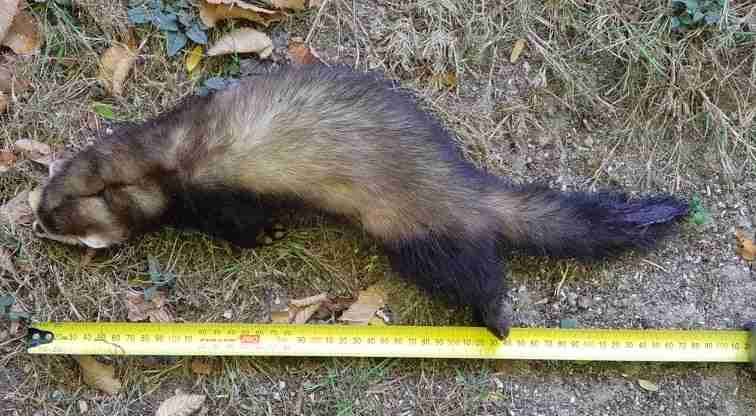
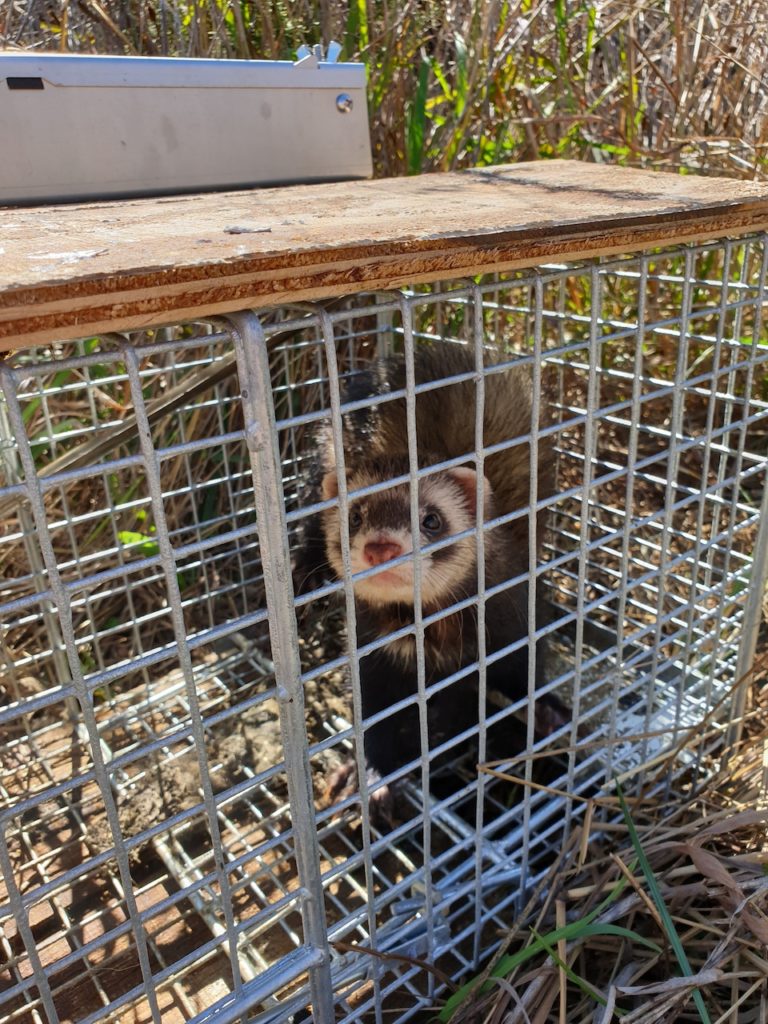
Ferret caught on a Moultrie camera

Some things to bear in mind:

  1. Possums are alerted by infra-red cameras. This could change their behaviours in interacting with a trap. Behaviour change is not an issue if you are wanting to monitor presence/absence of pests, but can be tricky if you are hoping these animals might enter the trap! There are no-glow cameras available that do not interfere with behaviours.
  2. According to local feedback, cameras that operate solely on rechargeable batteries require more maintenance and can be more unreliable.
  3. Most online advice is for capturing deer, which are wildly different to the smaller target species we are after.

Test your new camera inside with domestic animals to better understand your equipment, allowing for the best setup when you take it outdoors.

In summary, cameras are a useful tool in pest control, as they show you what may be interacting with your trap and what may be stopping animals entering it or what you are at risk of trapping that you would rather not. They also reveal why your trap may have been released with no pest inside to show for it – the great escapees of the pest world.

Ferret caught escaping a live trap on a Bushnell camera

How to use the Tāwhiti Smart Cage – a double-ended live catch trap with sensors.

Note: There are a lot of tips out there on how to use other types of live catch trap, but these are specific to the “Tāwhiti” – the double-ended smart traps we sell at PFF. If you would like to buy a Tāwhiti trap, please go to our shop.

Why a double-ended live catch trap?

They are very versatile as they can target a wide variety of pest species, including ship rats, Norway rats, possums, feral cats, stoats, ferrets, hedgehogs and rabbits. They are significantly more effective than most kill traps – the large double entrances presents little risk, and the treadle trigger requires only a foot step.

Why a plywood floor?

This has been proven to greatly improve the catch rate of a live catch trap. This is because it is a more natural surface for the pest to walk over than mesh. Also over time it traps and holds the scent of the lure and the scent of the pests that come into the trap. Pests are interested in the scent of other pests, and it is quite common to catch a pest of a different species just the day after after you have caught a stinky mustelid.

Why have a sensor with wireless signalling ?

The sensor detects when the trap has tripped and sends out a wireless signal to Trap.NZ. This notifies the Trap.nz app on your phone and also emails you to tell you which trap has gone off. You can include friends and neighbours in your Trap.NZ setup, so they also receive the message and email. This is a useful way of running a trap on a boundary, where you and a neighbour can take turns emptying it, or for allowing someone to look after your traps when you’re away.

It’s proven that having automatic notifications means people catch more pests. No more walking a trapline in the pouring rain and finding no pests. With an automatic sensor you can check 20 traps at your kitchen table over toast and coffee, and if there’s no catch, you don’t need to go out.

Live capture, remote monitoring and the law.

Note there are strict animal welfare regulations with live capture, and protocols to follow with remote monitoring. Fines for breaches of up to $5,000 for individuals can apply.

Please ensure you have read the following before using the Tāwhiti:
Check Your Sensors Trap.nz app guideline.
MPI Remote Monitoring Systems Guidelines

The Tāwhiti system puts all responsibility on the trap owner to actively* check the trap status daily via Trap.nz or the sensor provider. As a trap owner you must ensure back up is available should you be unavailable to inspect a trap. The trap owner is responsible for managing the communications between trappers assigned to their trap.


* Please do not rely on email notifications – email is not fail safe, and will not notify of a failed sensor (i.e. drained battery etc.)

Using any live capture trap has very specific obligations under the NZ Animal Welfare Act 1999, so please follow the rules below when using a Tāwhiti.

Legal obligations

  • You must check every day to confirm that the trap is still on the network (has not lost its signal). A trap can lose signal from a sensor fault or when the sensor battery runs out. If you see a trap has lost its signal, you must go out and check it, or arrange for someone else to check it within 12 hours of sunrise on that day. Please stick to the guidelines.
  • You must visit the trap, or get another person to visit it, within 24 hours of notification of the capture of any animal.
  • If you go on holiday, you must have a plan for another person to check the trap status.
  • The person who visits the trap must remove any live animal found in the trap and either attend to the care of the animal or, without delay, kill the animal humanely.
  • If you catch a cat, note that under the Wild Animal Control Act 1977 it is illegal to release a feral (non-pet) cat once it has been caught. Feral cats must be humanely killed while still in the trap. See the Auckland Council cat control guidelines.

Some funders request landowner sign-off for remote monitored live capture. An example sign-off document exists here.

Do pests go in them?

A picture speaks a thousand words, so have a look at this thermal camera film of pests going into a Tāwhiti.

Ferret entering a disabled cage. Over 3 nights a cat, ferret, hedgehog, and multiple rats entered this cage. One ferret killed half of the kiwi released in the Hunua in 2017.
Images courtesy of Unless.nz and the amazing Cacophony Project
This ferret was caught three second from entering the frame. He was simply walking a scent trail.
Images courtesy of Unless.nz and the amazing Cacophony Project

How to put the trap together

If you get your trap by post, you’ll have to assemble the frame. This is much easier to show than to describe in words, so here’s a video on how to do it.

Tips for reducing sensitivity
The “two-bar” trigger mechanism is very sensitive by design to ensure pests are caught at the slightest touch. If you find that your trap is too sensitive (i.e. it goes off if you drive a tractor past it) there are several things you can do to make it less trigger-happy.

  • Check the contact point of the trigger bars. Bend the long bar as necessary to get the ideal contact.
  • Flatten the plastic tube with sandpaper to give more resistance and increase the travel required.
  • Slide the plastic tube to the top of the bottom trigger bar.

Picking the trap location

Along a wall, or by the side of a road where a road narrows to go over water, or along a path in tall vegetation are all good places. Putting the trap under cover, such as under a bush, allows pests to feel more secure. However, make sure branches do not impede the trap doors.
Don’t put a trap where stock can reach it. The trap mechanism is very sensitive, so an inquisitive sheep or cow will easily set it off by licking or nuzzling, and then it won’t catch anything.

How to set/reset the trap.

The ideal set, soil surface, sides blocked off.
  1. Place the trap on flat and level ground. Peg it to the ground in one or more corners to prevent animals from tipping it over when caught and possibly opening the trap doors.
  2. Kneel by the trap on the same side as the “T” shaped trigger bar, and completely take out one of the doors, (otherwise you’ll need 3 hands!). Raise the remaining door up to the very top of its groove, and push the trigger bar down until it is vertical in front of you and the trip arm is across the door. Keep holding the trigger bar in place with one hand, and let the raised door gently down with your other hand until the projecting hold bolt on the door is resting on the trip arm. Manipulate the trigger bar in the centre so it sits behind the opposing lower bar. Gently allow all the weight of the door to press onto the trigger arm. Take care not to let the trigger bar fly up, as this will drop the door.
  3. Put the door you removed into the other end so its hold bolt is resting on the other trip arm. Gently release the trigger bar. If it starts to slide away from the central lower bar, reposition it until it holds steady. When setting the trap the central pressure plate should be horizontal, not tilted to either side, and have good trap floor clearance on both sides. This can be adjusted by moving the trigger bar slightly left or right.
  4. When the door by the sensor has been in the “up” position for a few seconds, you should hear a beep. This indicates that the sensor is engaged and ready to work.
  5. Test-close the trap a couple of times using a stick through the side to push on the pressure plate to check that vegetation, sticks, stones or other things do not get caught in the mechanism and prevent it from closing. In particular, make sure there are no bumps, stones or twigs under the pressure plate.
  6. Walk away and wait for your first notification that you’ve caught a pest!

Luring the trap

The Tāwhiti comes with an automatic lure dispenser that will deliver fresh salmon oil mayonnaise onto the treadle for at least 10 months, so it doesn’t need any other lure. This bait is attractive to all pests, very much including possums.

Pe-luring the Tāwhiti

While not strictly necessary, you can improve results by running a line of lure down the centre. This helps guide the animals in. Do this on the initial set, and when convenient. Perhaps keep a jar or squeeze bottle in the rifle bag.

The Motolure needs to be initialised before use, really easy and here’s how.

Ensure you initialise the motolure before use in the field.

The lure will last approximately 10 months, contact us for more, or you can fill them yourself, here is a handy how to video for refilling the ZIP Motolure.

The most successful multi-species lure recipes we have found are:
Recipe #1 – Possums, Ferrets, Feral cats, Rats, Hedgehogs

  • 400gm Best Foods or Helmans full fat mayo
  • 2 Tblsp of Connovation Salmon Oil Concentrate

Recipe #2 – Possums, Ferrets, Feral cats, Rats, Hedgehogs

  • 400gm Best Foods or Helmans full fat mayo
  • 1 Oxo Chicken Stock Cube (crushed)

Keep a bottle in your backpack or air-rifle case and apply a little to the cage floor and surrounding area to lead animals in.

Please let us know if you find any magic formulas, particularly for stoats and weasels.

Avoid other baits if possible

The lures supplied have proven to be effective across the pest species. Statistics show that using other lures such as fresh meat can have a detrimental effect on some species (possums for example.) Fresh meat can also increase the likely hood of non-target species such as hawks, or smaller birds once fly blown. Unless targeting a specific species we suggest sticking to the lure supplied.

If targeting feral cats, please see the Auckland Council cat control guidelines.

Shoot pests in the trap and don’t wash off the blood. The more blood, urine and faeces that soak into the plywood floor of the trap, the more interesting it becomes to the next pest to visit.

All mustelids are attracted by the smell of another mustelid, so when you catch a stoat, weasel or ferret, particularly if it is male, drag its body genital-side over the ground all around the trap and down the trail in either direction to attract others. If you have multiple traps, use the same body on all of them, and make sure to rub it inside the traps on the floor. Gross, but it works!

Rabbit tips: Rabbits are not easy to target, it’s best to use the trap as an access route. Rabbits are highly repelled by the smell of blood, so if you are targeting only rabbits, make sure you remove the rabbit from the trap alive and kill it elsewhere to avoid getting blood in or near the trap. Best methods for rabbits is to use the cage and a gateway by blocking (hazing) either side of the cage.

How to kill a trapped pest

Do not put the cage in water to drown the animal. Drowning is a prosecutable offence under the Animal Welfare Act 1999.

The safest and most humane method is to use an air rifle (slug gun) to shoot the pest in the head. Air rifles do not require a licence to own or use, and an air rifle pellet will not ricochet off any metal part of the cage. Use an air rifle that is 700fps or more. It’s simpler not to use a suppressor as then the barrel fits through the bars. A shot vertically down between the ears, or from slightly behind and between the ears should be used for an instant painless despatch.

Take your time in aiming to ensure the first shot is fatal. Always be ready to make a second shot as soon as possible just in case the pest moves suddenly to make your first shot off-target.

Hedgehogs may curl up in the trap, in which case it is impossible to accurately aim for the head. Tip the curled hedgehog out of the trap onto the ground and wait for it to uncurl to get an accurate shot.

If targeting rabbits, you can, if you wish, remove the rabbit from the trap and despatch it with a strong blow to the back of the skull with a hard implement.

You will often see twitching movements immediately after despatch. This is normal and passes quickly. The animal is not suffering. The involuntary movements signal brain death. After 10-20 seconds the animal’s eyes will open wide and will not move if touched. Test by touching the eye to confirm that death has occurred.

Enhancing an old cage trap

If you have an old “dumb” cage trap lying around that you never use, why not upgrade it?
Most existing cage traps can be retro-fitted with a sensor and an automatic lure. We can supply both, do the conversion, and help you set the trap up on your phone. Contact contact@predatorfreefranklin.nz if you’re interested.

Raising an Eco-kid

As an initial disclaimer, I do not claim to be a parent. I do claim to be a ‘grown-up’ eco-kid. The following are things I experienced during my childhood that directly influence my actions and decisions as an adult.

Young eco-kid with a ferret

I was raised to be aware of my surroundings, to respect the Earth which we borrow from future generations. As an eco-kid I learnt the effects of small actions could make a large difference, particularly if many participate. Eco-kids join us as kaitiaki of Aotearoa and it’s unique environment during our time here.

I was set free into nature from the start. A bit of soil or mud never bothered me. Scavenger hunts in nature fostered an awareness for my surroundings. Building huts from scavenged materials like fallen branches encouraged ‘out of the box’ thinking.

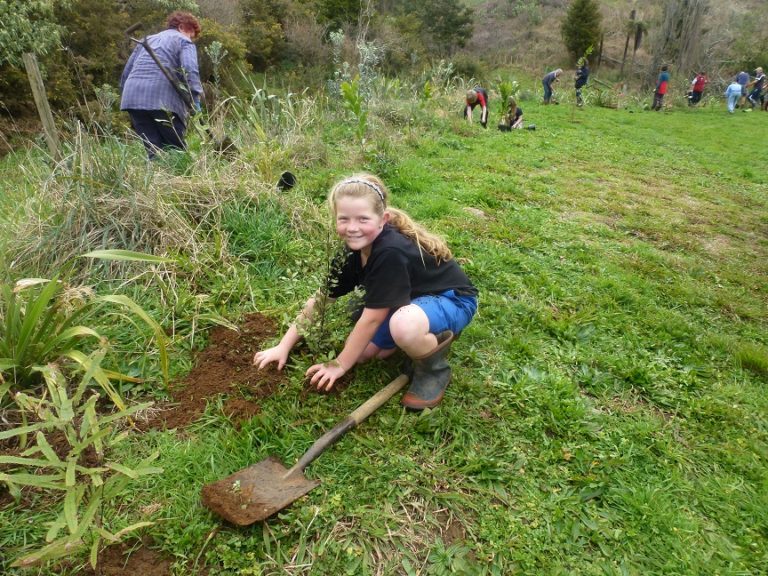
We ventured out at least twice a year and contribute to community tree plantings. Seeing those trees later in life and knowing you planted some is rewarding, and a reminder of the difference a small action can make.

The beauty of flourishing forests and wildlife, comes with death. Pest control is necessary to restore the original balance of Aotearoa, and can be discussed in terms of the destruction just one animal can cause. Pest control can be conducted respectfully, ensuring little to no suffering.

I did pest control rounds on our property with my father from a young age. As soon as I was strong enough, I was taught how to set and safely release a Timm’s trap. Later I joined dad as a volunteer, refilling bait stations in the Hunua Ranges. The world is bigger than your own backyard, and someone has to stick their hand up to help take care of it. That was another important lesson.

A grown-up eco-kid in 2020

Building insect and skink hotels as a holiday project keeps kids outdoors and excited by nature, as they watch it being colonised. Remember that rats and possums will prey on wētā and skinks as well.

Teaching the names of common birds and plants in English and Maori fosters a respect for biodiversity. Remember, where there is one Kererū there is often a second one as they pair for life, which can become a game of ‘hidden pictures’ in real life.

There are many ways to fillet a fish – find the one that works within your lifestyle.

Rurus about

A few of us carried out 5 ruru/morepork surveys in the early evenings last month. We had a great turnout for the Patumahoe / Henry’s Bush walk and enclosed are some of the ruru team. The ruru were not quite so plentiful with only 1 being heard. We had a great evening walk with a couple of minor diversions.

The Mauku and Bald Hill surveys were a different story with ruru locations far outnumbering people. For Mauku we heard ruru in 11 different locations including siting 2 just 15m away in a totara behind Vicki and Leonard Lacy’s house on Basset Rd. On the Mauku circuit we came across this on the footpath just along from the tennis courts. To our surprise just 3m above was an almost fully fledged kereru chick.

At Bald Hill (Whakaupoko) there were 8 different ruru locations within a radius of no more than 300m. We tried the bush behind Pukekohe Hill with no luck but to our surprise picked up 3 in Pukekohe around Rooseville Park with 2 of these outside the park area and around houses.

Anyone keen to do some surveys in their area and not sure what to do give me a call. Andrew Sinclair 021 268 1904. We will repeat these surveys each year. At Bald Hill and around Mauku it is encouraging to see the high numbers of ruru especially as many of the landowners in these areas have been actively controlling rats & possums mainly via frequent use of bait stations with low levels of bait. (Approximately 1kg/ha/year).

We will leave you with this poem composed by Whakaupoko Landcare chair Pete Hardy.

How to pulse your rat bait

You’ll get the best results from rat bait stations if you “pulse” your baiting. That is, only put out bait at specific times of the year. This is especially important when using modern baits such as Brodifacoum and Bromadialone, as they have a delayed action. This means that a rat that has eaten enough bait to kill itself will feel and act perfectly normally for several days afterwards, including eating more bait. So if you supply bait continuously all year round you will be wasting it down the gullets of “dead rats walking”. Waiting just long enough for each group of rats to die before putting out more bait saves you bait, time, and effort.

.

Following a pulse plan is good because it:

  • Knocks down rat populations at the right time (just before and during bird nesting season).
  • Stops bait being eaten by “dead rats walking”.
  • Reduces the amount of bait you need.
  • Minimises the amount of toxin that goes out into the environment
  • Prevents old bait hanging around in bait stations to go mouldy and put rats off it.
  • Saves you effort by not putting out bait in the autumn, when rats aren’t interested in it anyway because there’s lots of other food around.

.

Pulse for rat control only.
If you’re using multi-purpose philproof bait stations, only begin a pulsing pattern after you’ve knocked down your possum population, because possums love bait and eat a lot in a night, so a big possum population will empty out your bait stations pretty quick, leaving none for the rats. If you’re using rat-only bait stations (like the Pied Piper) you can start pulsing right away.

.

Basic pulsing.
If monitoring shows your rat numbers are high, put out bait at the start of every school holiday month, plus February. So baiting is only done in January, February, April, August, and November. Don’t put out any bait for the other 7 months of the year. To remember it easily, think: “School holidays four, plus Feb is one more”.

If monitoring shows you’re doing a good job keeping rat populations low, then skip one pulse in either January or February, and just do four pulses a year.

Remove all leftover bait at the end of each baiting period, as uneaten bait quickly becomes damp, mouldy and covered in slugs, and will put rats off from coming to the bait station. Dispose of old bait by wrapping it up securely and putting it in your rubbish bin.

.

Advanced pulsing
If you’re a methodical type of person and you want really effective rat control to contractor-level standards of bait efficiency, you can also pulse within the bait months themselves. So you put out bait in weeks 1 and 3 of the month, and remove it in week 4.
This chart shows how it works.

Happy baiting! (And thanks, Auckland Council, for the chart info.)

Trapping Tips

Below is a mixture of tips and tricks both from Auckland Council recommendations and suggestions that have come from members of the Friends of Te Wairoa pest control project. There is no one correct way to control pests. They are intelligent and learn to be wary of certain things, and can also pass on these behaviours to others. This means it is important that we constantly change our mode of attack, so that they are caught unawares, literally!

Rats & Mice:

Placement:

  • Bait lines 100m apart
  • Bait stations or traps every 50m along a trap line
  • 25m spacings between traps or stations on boundaries (not needed where neighbours are also trapping)
  • Place traps near a waterway, or along a fence line/retaining wall. They like to be able to run between areas using what ‘shelter’ they can, rather than being in the open.

Lure:

  • Peanut butter or Nutella – smear on bait bags to increase attraction too
  • Kibbled wheat/oats/other grain mixed with peanut butter or Nutella
  • Using a lighter, melt a small piece of cheese to the trigger mechanism

Tips:

  • Attach T-rex traps to a board to place further into holes e.g. under a house/in a ceiling. This also helps to prevent an animal running away with the trap.
  • Place lure deep in the back of T-Rex traps and on the underside of the hood.
  • Build a tunnel around rat traps to make them more attractive. This can be as simple as a board base with corflute or other rigid plastic stapled tunnel-fashion on top.
  • Pop wax bait blocks on a nail on fenceposts, with a half milk bottle on top to protect it from the weather.
  • If you don’t have enough bait stations, an ice-cream container does the job just as well. Cut a C-shaped hole in the edge of the tub for an entry hole, and attach the lid with the bagged bait stuck between the lid and the tub. Think about water if it is out in the open – you may need to fashion a kind of awning to prevent rain getting in.

Possums:

Placement:

  • At the base of an attractive tree or in a grove of trees e.g. in an orchard, the base of a large palm or large natives
  • Near waterways that they would use to drink from
  • Near a pathway that they might use e.g. a fence line, farm track

Lure:

  • Long life lures and bait cards
  • A cut apple with cinnamon rubbed on the cut side
  • Carrot (with cinnamon)
  • Feijoas, citrus or other fruit they are enjoying
  • Aniseed, can be added to fruit lures

Tips:

  • You can attach a Timm’s or trapinator to a board, so that it is elevated from pets and easier to move around rather than attaching directly to a tree.
  • Buy cinnamon in bulk e.g. Bin Inn – $2 per 45g in supermarkets vs. $7 for 500g !

Mustelids:

Placement:

  • Approximately one trap per 15ha
  • On flat ground so that the trap is stable and doesn’t rock
  • Near a waterway, or along a fence line/retaining wall. They like to be able to run between areas using what ‘shelter’ they can, rather than being in the open.

Lure:

  • Mayonnaise mixed with salmon oil
  • A whole, raw egg – also functions as a visual lure. When changing this, throw it into the bushes nearby to attract mustelids to the area of the trap
  • Fish/salmon (raw or cooked)
  • Meat scraps from dinner (raw or cooked)
  • Possum or rabbit meat from recent catch.

Tips:

  • Rub a freshly caught possum or mustelid on the trap. The scent will attract mustelids.
  • Disturb the ground near the entrance by pulling out grass or roughing up leaves.

Rabbits:

Tips:

  • The best mode of attack is to shoot these pests.
  • A live trap with a trigger plate, using vegetables as the lure with a vegetable trail leading into the trap. Sometimes the smell of a rabbit who has urinated or left droppings is enough to entice another rabbit into the trap.
  • For impossible rabbits with easy access warrens, MagToxin pellets are very effective.

Ruru and bat surveys in Franklin this spring.

Anecdotally we are told by people that there are more ruru (morepork) in areas where we have been carrying out good rat and possum control. This is especially interesting where we are using bait stations for control, as brodifacoum (the active ingredient in Pest Off bait ) has a long half life, so there is a concern that it could build up in the environment and threaten native birds like ruru.

However, our recommended programme of pest control only requires small amounts of bait around 5 times a year once pest numbers are low, and we also minimise bait access by non target species. If (as we are being told) Ruru appear to be thriving in our control areas, it suggests that the presence of predators is more dangerous to them than bait stations. We’d like to support that by doing some citizen science, so this spring in 2020 we are organising four baseline surveys to count the numbers of ruru in four different areas. We’ll repeat these surveys every year to see how our ongoing predator control affects the numbers of ruru in each place.

Start time for all surveys is 8.00pm. The locations and dates are:

  • Patumahoe Monday, October 26th. Meet at Clive Howe Rd sports car park by school. We will complete a circuit of Clive Howe area, Te Ara Owhangamaire and Henry’s Bush.
  • Pukekohe Hill Summit Wednesday October 28th. Meet below the car park area and locked gates. We will complete a short 1.5km circuit in the Reserve area to the south of the summit.
  • Mauku Monday Nov 2nd. Meet at St Brides Church on Findlay Rd. We will complete a 4km road circuit, mostly on the road with a couple of off road expeditions.
  • Pukekohe Rooseville Park Wednesday Nov 4th. Meet at the top of Ngahere Rd. We will complete a 1.5km circuit around the Reserve.

And bats as well!
We have records of long-tailed bats at all of these sites apart from Rooseville Park. Those records are from audio recorder devices that were left out all night to record bat passes. However, we have some hand-held bat detectors, so on these walks we’ll bring them along and have a crack at picking up some bats. It will be very exciting to find some.

So come join us for an evening walk and learn about bats and ruru. We’re walking over rough ground in the dark, so bring suitable footwear and a torch or small headlight. If it’s raining phone Andrew Sinclair 021 268 1904 to check if it’s postponed.

Farrell’s Nursery – New Hub Days

Next Wednesday, Oct 14th, 10.00am – 1pm we will be running a Hub day with free trap and bait supplies. This is at Farrell’s Nursery, 46 Pollock Rd. We will be repeating these on a monthly basis in November on the first Wednesday of each month apart from January. It is an interesting development that is being supported by Auckland Council and the Franklin Local Board who have kindly provided funding for pest control materials. Both ourselves and Farrell’s nurseries are keen to see more plants in the ground and further pest control across the area. Hopefully we will see you next Wednesday and you can come grab a few of your favourite trees to plant at the same time.

We will have the following available for free:

  • Rat trap – Mainly plastic snap E type.
  • Possum kill Traps – Flipping Timmy’s – easy to set up out of small dog and young child range
  • Pied Piper rat bait stations
  • Mini Philproof possum/rat bait stations
  • Rat & possum bait options

If you are coming along we will also be on hand to help you set yourself up on Trap NZ, the free web and phone app that lets you track your predator control results. If you don’t have the app already on your phone, go to the app store and search for “Trap NZ” and follow the instructions. Or go to the home page on this site and click on your area on the big map, then follow the steps to join a TrapNZ project in your area. You will need to set up a user name and password to log into a project.

We will have some awesome new cage traps available after Christmas. Also we’ll keep you up to date on other Hub days across the region as they get finalised as we come out of lockdown restrictions. For instance, it looks like there will be one at Waiaua Pa on Sunday Nov 1st and also Saturday Nov 28th at Kawakawa Bay.

Pest News from Friends of Te Wairoa

Kia Ora trappers, and welcome to the new members of our Wairoa river catchment pest control team. Alongside this newsletter, a friendly reminder to check, reset and rebait those pest eradication devices around your property, and send in your latest catch numbers. It may also be a time to review placement and spacing of traps. Auckland Council has released a revised set of guidelines to assist you.

New date for the Clevedon Bait and Trap Day: Sunday 18th October

Drop in for a chat about pest control on your property between 9am – 12.30pm

Location to be confirmed – check the Friends of Te Wairoa facebook page for up to date details. If lockdown levels rise, the event will be postponed.

We are hoping to hold a bait and trap day in Ardmore in the near future too.

Catch data comparison:

  2018 – June 2020: From July 1, 2020:
Possums: 2095 38
Rats: 617 51
Mice: 283 6
Ferrets: 12 10
Stoats: 4 0
Weasels: 1 0
Feral Cats: 19 12
Rabbits: 312 57
Hedgehogs: 31 0
Hares: 44 2
Magpies: 0 2
Total: 3479 178


This highlights the importance of reporting data – your property counts towards totals we can be proud of! A big thankyou to the properties that regularly email their catch, or use trap.nz.

Special mention to the ONE Hunua property responsible for most of the feral cats and all 10 of the ferrets since July 2020 – making a total of 14 ferrets caught on this property since March, frozen and sent for research on population dynamics. Also a special mention to a young member of our community who stopped and picked up a warm stoat carcass from the side of the road with his father, which was also frozen and sent for research.

‘He who made the greatest mistake did nothing because he could only do a little.’ Every mouse trapped counts, every mustelid saved for research helps.

During these trying and uncertain times, if you want to turn pest control into a bit of extra cash there is of course the option to pluck possum fur to sell. This is easiest when the body is still warm, but can be done cold too. It can be done by hand although possum plucking machines do exist. There are also companies around that will buy rabbits and hares to turn into petfood. A bit of internet searching should provide companies involved in these industries.

There is always knowledge and ideas to be shared, within and between trapping communities. A recent conversation with a Waiheke trapper gave an insight into another approach to rabbit control – a live trap with a trigger plate, veges as the lure and a vege trail leading into the trap. Kimberly tells me that sometimes the smell of another rabbit, who has urinated or left droppings, is enough to entice another rabbit into the trap.

Sharing of knowledge is vital to overall success of this wonderful concept of predator eradication in New Zealand. What works for your property may not work for everyone, but it may just work for your neighbour and your dog’s secret best friend on the other side of the valley. There are some neat stories coming through of neighbours offering to help neighbours, and people trapping on multiple properties. This shows awesome community spirit and teamwork – that’s how we’ll get the job done. I am interested to hear tips that work for you – I am compiling a list of ‘Trapping Tips’ that seem to work locally and would appreciate some anecdotes and ideas! Any wonderful stories that might inspire others are welcomed too.

Recently, there have been sightings of Karearea (NZ Falcon) in the area, which is wonderful news and something we’d like to encourage, so keep up the great work. On the topic of birds, Auckland Council are still wanting sightings of wild Australian sulphur crested cockatoo in the area – they appear to be settling in quite nicely, which we want to discourage!

Local community heroes among you, to inspire and encourage:

  • Christine Mason: Stepping up to store bait and traps for ease of access for Clevedon trappers. Christine has also been experimenting in making homemade possum lure – when the recipe is smoothed out I hope to be able to share this with you all.
  • Hugo McPhail: One of the youngest, and contending for the most enthusiastic member of our community is Clevedon Primary School student Hugo. Read his story here.

As always, get in touch with me if you need specific advice, a visit, or more hardware. I enjoy hearing about what’s happening out there so good news stories are great too.

Happy trapping!

Lenny van Heugten
Pest Control Co-ordinator
Friends of Te Wairoa

Lennyvh@windowslive.com

Hugo McPhail: A Dose of Inspiration

Predator Free 2050 was always an ambitious goal, but bit by bit we are hearing regional success stories that make it seem increasingly possible. 2050 is still 30 years away, and when you think about it like that, you begin to realise that it is the younger generation that will be completing the task that we have begun.

We became aware of the youngest registered member of our trapping community via radio presenter Jesse Mulligan. Hugo McPhail, 12 years old, was directed our way to begin logging his catches on trap.nz. A school research project highlighted for Hugo the impact of pests on native bird populations, and he decided to dive in and make a difference. When asked why he keeps trapping, his reply was ‘I enjoyed it and I was catching heaps’.

Hugo McPhail and one of his many successes.

‘Since starting my trapping I’ve learnt so much more about how the rats impact our environment and I’m so glad I’m getting so many… I took mum to check the traps the other day and two rats ran across her feet so there’s plenty more to get.  We still haven’t caught the biggest rat ‘Lanky Phil’. We think we have caught him twice but he keeps getting out… the hunt continues. He’ll trip up one day!’

Since July 2019, Hugo has trapped 80 rats and 12 possums. He has been granted permission by the principal of Clevedon School to trap on the grounds after a series of meetings detailing how he was planning to trap and what practices he would use to keep other children safe. Hugo also traps on his own 12 acre property in Ness Valley, and another property in the Clevedon area.

Hugo’s efforts must be making a difference, as he reports less rats being trapped at Clevedon School and lower possum numbers at his home property.  ‘Our property is on the edge of the Mataitai Forrest and we have a lot of bird life including lots of Kereru, Kingfisher and a family of noisy Kaka.’

Hugo and his father are in the process of setting up a bait line around the edge of the native bush, as Hugo’s enthusiasm refuses to diminish. Following a delivery of traps and bait stations from Friends of Te Wairoa, Hugo had his boots on and was ready to head out and set his new traps right away.

You can’t help but smile and admire Hugo’s endless enthusiasm for pest control and our native biodiversity. We can all use some motivation sometimes, as it seems such an overwhelming, never-ending task. As Edmund Burke once said: Nobody made a greater mistake than he who did nothing because he could only do a little.